HomeWhen You Need an Iron Infusion vs Oral SupplementsIron deficiencyWhen You Need an Iron Infusion vs Oral Supplements
When You Need an Iron Infusion vs Oral Supplements
Iron deficiency treatment is one of the most common concerns in primary care today. Iron is an essential mineral that helps your body produce hemoglobin — the protein that carries oxygen in your red blood cells. When iron levels fall, symptoms such as fatigue, dizziness, shortness of breath, and brain fog can appear. Choosing the right iron deficiency treatment often comes down to deciding between oral iron supplements and an iron infusion.
Both options play an important role in managing anemia. The best approach depends on how severe your deficiency is, how your body responds to treatment, and how quickly your iron levels need to recover.

Understanding Oral Iron
Oral iron supplements are usually the first-line option for iron deficiency treatment. These include common formulations such as ferrous sulfate, ferrous fumarate, and ferrous gluconate. They work by slowly increasing iron absorption through the digestive system and are widely used as iron supplements for anemia.
Why oral iron works for many people:
Oral iron supplements are affordable and easy to take at home.
They can effectively correct mild to moderate anemia over several weeks.
They avoid needles, clinic visits, or IV therapy.
For many patients, iron supplements for anemia are enough to restore healthy hemoglobin levels. However, side effects are common. Nausea, constipation, abdominal pain, and dark stools cause many people to stop oral iron supplements before seeing results.
In addition, some individuals simply do not absorb iron well. Conditions such as celiac disease, inflammatory bowel disease, chronic gastritis, or prior bariatric surgery can make iron deficiency treatment with tablets ineffective.
If you’ve been taking oral iron supplements consistently for one to two months with little improvement, it may be time to consider an alternative option.
When Iron Infusions Make Sense
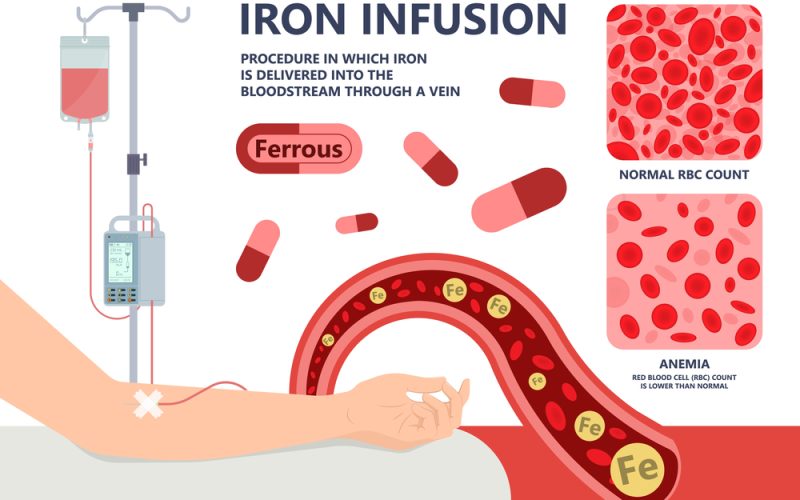
An iron infusion delivers iron directly into the bloodstream through an intravenous (IV) line. This method bypasses the digestive system, making it one of the fastest and most reliable forms of iron deficiency treatment.
You may need an infusion if:
- Oral iron causes severe side effects or you can’t tolerate it.
- You have trouble absorbing nutrients from food or tablets.
- Your anemia is severe and needs to be corrected quickly (for instance, before surgery or late in pregnancy).
- You have a chronic condition like kidney disease or inflammatory bowel disease that makes oral iron less effective.
One of the key iron infusion benefits is speed. Unlike iron supplements for anemia, which may take months to fully work, an iron infusion can restore iron levels within days to weeks. This makes it particularly useful before surgery, during late pregnancy, or when rapid recovery is required.
Modern IV preparations are safe, and serious reactions are rare. Most patients tolerate treatment well and notice improved energy shortly after receiving an iron infusion.
Comparing the Two Approaches
There isn’t a one-size-fits-all answer. For many, oral supplements are enough. For others, an infusion is a game-changer — restoring iron levels quickly and allowing them to feel like themselves again.
Oral Iron
Speed of Recovery: Gradual, usually taking weeks to months to improve iron levels.
Convenience: Can be taken at home without medical supervision.
Cost: Usually low and easily accessible.
Common Side Effects: Stomach upset, constipation, or mild gastrointestinal discomfort.
Best Suited For: Individuals with mild anemia, good iron absorption, and no urgent need for rapid correction.
Iron Infusion
Speed of Recovery: Rapid improvement, typically within days to weeks.
Convenience: Requires a clinic visit and professional administration.
Cost: Higher cost; may require insurance authorization.
Common Side Effects: Rare allergic reactions, mild fatigue, or temporary discomfort at the infusion site.
Best Suited For: People with iron intolerance, malabsorption issues, severe anemia, or urgent cases requiring fast correction.
What to Expect After Treatment
With iron supplements for anemia, hemoglobin levels usually rise slowly. Patients are often advised to continue oral iron supplements for several months even after blood levels normalize to rebuild iron stores.
After an iron infusion, some people experience mild flu-like symptoms or fatigue for a day or two. Blood tests are typically repeated to confirm successful iron deficiency treatment and ensure iron levels remain stable.
Many patients report noticeable improvements in energy, focus, and exercise tolerance — one of the most valued iron infusion benefits.
Making the Right Decision
If you suspect iron deficiency, avoid self-diagnosis. Fatigue and weakness can have many causes. A healthcare provider can confirm the diagnosis with blood tests and recommend the most appropriate iron deficiency treatment.
Your treatment plan should consider:
Severity of anemia
Response to oral iron supplements
Presence of absorption issues
Urgency of iron correction
In some cases, a combined approach works best — starting with an iron infusion for rapid correction, followed by iron supplements for anemia to maintain healthy levels.
The Takeaway
While oral iron supplements remain the first step for many patients, they are not always effective or tolerable. When tablets fail, the proven iron infusion benefits — faster recovery, better absorption, and improved quality of life — make IV therapy an excellent option.
At Healthzone Barwell Medical Center, we offer comprehensive assessment and personalized iron deficiency treatment plans. Whether you need guidance on iron supplements for anemia or are considering an iron infusion, our team is here to help you restore your energy and wellbeing.
Feeling tired doesn’t have to be normal, book a consultation today and take control of your iron health.
FAQs
For most people, oral iron supplements begin improving hemoglobin levels within 2 to 4 weeks. However, it can take 2 to 3 months of consistent use for iron supplements for anemia to fully correct iron deficiency. Many patients are advised to continue treatment even longer to rebuild iron stores and ensure long-term iron deficiency treatment success.
Signs that oral iron supplements may not be effective include persistent fatigue, dizziness, shortness of breath, or blood test results that show little improvement after several weeks of treatment. In such cases, your doctor may recommend an iron infusion as a more effective form of iron deficiency treatment, especially if absorption issues are present.
One of the key iron infusion benefits is speed. Many patients notice increased energy within days to two weeks after an iron infusion. Blood iron levels often improve much faster than with iron supplements for anemia, making infusions ideal for severe deficiency or urgent situations.
For severe anemia, an iron infusion is often more effective than oral iron supplements. Infusions bypass the digestive system, allowing iron to be delivered directly into the bloodstream. This makes them a preferred iron deficiency treatment when rapid correction is needed or when tablets are not tolerated.