HomeHow to Know if Your Skin May Have Skin Cancer (and Why Early Signs Matter More Than You Think)Skin ProblemHow to Know if Your Skin May Have Skin Cancer (and Why Early Signs Matter More Than You Think)
How to Know if Your Skin May Have Skin Cancer (and Why Early Signs Matter More Than You Think)
People sometimes say their skin feels “infected with skin cancer,” but that wording can be misleading. Skin cancer isn’t an infection — it doesn’t spread from person to person, and it isn’t caused by germs. It begins when skin cells start growing in an abnormal, uncontrolled way.
What truly matters is recognizing the early signs of skin cancer. Skin cancer is one of the most common cancers worldwide, but it’s also one of the most treatable when detected at its earliest stages.
“Localized early-stage melanoma has a 5-year survival rate of about 99%, but survival drops significantly once the disease spreads to regional lymph nodes or distant organs.” — U.S. melanoma survival statistics
This is why understanding the early signs of skin cancer is far more important than many people realize.
Below is a clear, practical guide to help you recognize the early signs of skin cancer and know when to seek professional advice.
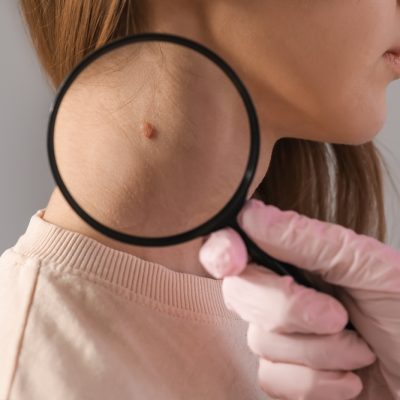
What the Early Signs of Skin Cancer Can Look Like
The early signs of skin cancer are not always dramatic. Many people dismiss them because they seem minor or harmless. Paying attention to subtle skin changes can make a lifesaving difference.
1. A New Spot or Bump
One of the most common early signs of skin cancer is a new spot or bump that looks different from the rest of your skin. While new freckles or moles can appear over time, a spot that stands out, grows, or changes should never be ignored.
2. A Sore That Doesn’t Heal
Healthy skin repairs itself quickly. A sore that lingers for more than 2–3 weeks, reopens repeatedly, or bleeds with very little trauma can sometimes be a sign of early skin cancer.
3. Rough, Scaly, or Crusted Patches
Some early signs of skin cancer, especially squamous cell carcinoma, look like rough or scaly patches of dry skin. If a patch does not improve with moisturisers or keeps returning, it should be checked by a healthcare professional.
4. Changes to an Existing Mole
Dermatologists often use a simple rule called ABCDE to identify concerning moles:
- A – Asymmetry: One side doesn’t match the other.
- B – Border: Edges look jagged, blurred, or uneven.
- C – Color: More than one color, or a mole that turns darker or develops new shades.
- D – Diameter: Larger than 6 mm (about the size of a pencil eraser), though smaller ones can still be cancerous.
- E – Evolving: Any noticeable change — size, shape, color, texture, bleeding, itching.
Of these, “Evolving” is often the most important. Research shows that moles that change over time carry a higher likelihood of being melanoma compared to moles that remain stable.
How to Check for Early Signs of Skin Cancer at Home
A monthly self-check is simple and can be lifesaving. Here’s a routine that takes about 5 minutes:
- Stand in a bright room with a full-length mirror and a hand mirror.
- Check your face, ears, neck, chest, arms, elbows, hands, and nails.
- Look closely at your legs, behind your knees, and between toes.
- Use the hand mirror to examine your back, buttocks, and the back of your legs.
- Don’t forget the scalp — part your hair in sections.
Taking photos of any spots you’re unsure about can help you track changes — one of the clearest early signs of skin cancer.
“Regular skin self-exams help people detect suspicious changes in their skin early, which can lead to earlier diagnosis and treatment of skin cancers compared with relying solely on infrequent clinical exams.” — The Skin Cancer Foundation
What Doctors Do to Confirm a Diagnosis
If something looks suspicious, a doctor will usually perform a skin examination and, if needed, a biopsy. A biopsy involves removing a tiny sample of skin so a pathologist can examine the cells under a microscope.
It’s simple, quick, and the only reliable way to know for sure whether a spot is cancerous.
What to Expect After Treatment
With oral supplements, it can take several weeks for hemoglobin to rise. It’s important to continue the tablets for a few months even after levels normalize to replenish your body’s stored iron.
After an iron infusion, you might feel a bit tired or experience mild flu-like symptoms for a day or two. Your healthcare provider will check your blood work afterward to make sure your iron and phosphate levels are within a healthy range.
Types of Skin Cancer and Their Early Signs
Understanding the different types of skin cancer can help you recognise their early signs.
Basal Cell Carcinoma (BCC)
- Looks like a shiny bump, a pinkish patch, or a sore that doesn’t heal.
- Usually grows slowly but can cause damage if ignored.
Squamous Cell Carcinoma (SCC)
- Appears as a rough, scaly patch or a wart-like bump.
- Can grow faster than BCC and may spread if untreated.
Melanoma
- Often starts as a changing mole or an unusual dark spot.
- Can spread quickly, making early detection crucial.
When You Should See a Healthcare Provider
You should book an appointment if you notice any early signs of skin cancer, including:
- A new mole or spot that looks unusual
- A mole that changes in any way
- A sore or patch that persists longer than 2 weeks
- A spot that tingles, stings, itches, bleeds, or crusts repeatedly
- Anything that feels “off” compared to the rest of your skin
Your instinct matters — many people who catch skin cancer early say they “just had a feeling something wasn’t right.”
Prevention Tips That Truly Make a Difference
- Use a broad-spectrum SPF 30+ sunscreen daily
- Wear protective clothing during peak sun hours
- Avoid tanning beds (linked to significantly higher melanoma risk)
- Perform regular self-checks
- Schedule yearly skin exams if you’re at higher risk
“A prevention study found that consistent sunscreen use can reduce melanoma risk by up to 40%.”
Final Thoughts — And Where to Get Checked
You don’t need to panic every time your skin changes — our skin constantly reacts to the environment, hormones, age, and sunlight. But you should pay attention to anything that looks new, different, or persistent.
Skin cancer is highly treatable when caught early, and checking your skin regularly is one of the simplest ways to protect your health.
If you’re unsure about a mole, a patch that won’t heal, or any skin change that feels “not quite right,” don’t wait. Early reassurance is always better than late treatment.
For a thorough, professional skin check in your local area, book an appointment at Healthzone Barwell Medical Center in Castle Hill today. Their experienced healthcare team can assess any concerning spots, guide you through next steps, and give you peace of mind.
FAQs
Yes, itching can be one of the early signs of skin cancer. While many harmless skin conditions can cause itching, a spot or mole that itches persistently, tingles, or feels irritated — especially if it also changes in size, shape, or colour — should be checked by a healthcare provider.
A sore that does not heal within two to three weeks can be an early sign of skin cancer. Spots that bleed easily, form a crust, or repeatedly reopen are commonly associated with basal cell carcinoma or squamous cell carcinoma and should not be ignored.
A cancerous mole often shows early signs of skin cancer such as asymmetry, uneven borders, multiple colours, increasing size, or ongoing changes. Using the ABCDE rule is a helpful way to decide whether a mole needs medical evaluation.
Yes, some early signs of skin cancer can resemble dry skin, eczema, or even a pimple that does not go away. If a patch remains rough, scaly, or inflamed despite treatment, or a pimple-like bump persists for weeks, it is important to have it examined.