HomeWhy Seasonal Flu Vaccination Matters for Every Age GroupImmunisationsWhy Seasonal Flu Vaccination Matters for Every Age Group
Why Seasonal Flu Vaccination Matters for Every Age Group
Staying one step ahead of the flu
Each flu season is unpredictable. Some years it spreads quietly, and other years it causes waves of illness that overwhelm hospitals and disrupt daily life. What stays the same is this: the flu vaccine remains our best defense. Health experts recommend that everyone six months and older gets vaccinated each year. Why? Because flu shots don’t just protect individuals—they protect families, workplaces, schools, and entire communities.
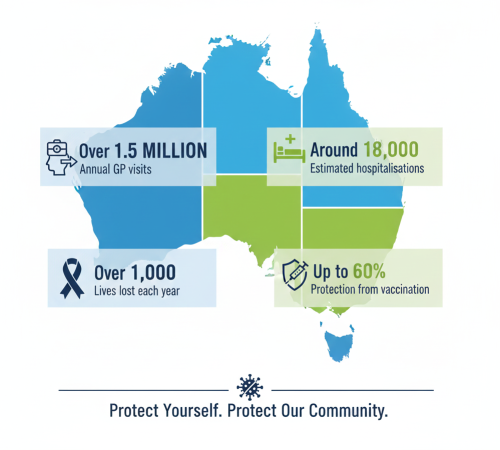
“In Australia, more than 109,000 flu cases have already been reported this year, with a worrying trend of low seasonal flu vaccine uptake — with only about 25% of Australians vaccinated overall.”
Source: ABC News influenza vaccine coverage and flu case rise (mid-2025).
Protection that reaches beyond you
- Fewer sick days, fewer hospital visits- Getting vaccinated makes you less likely to catch the flu, and if you do, your illness is usually shorter and milder.
- Shielding the vulnerable- Infants too young to be vaccinated, older adults, and people with health conditions like asthma or heart disease depend on those around them to help stop the spread.
- Community immunity- The more people who are vaccinated, the harder it is for flu to travel from one person to another.
Why every age group benefits
- Babies and young children: Children can get seriously ill from flu. If it’s their first flu season, they may need two doses for full protection.
“Among children aged six months to under five years in NSW, influenza vaccination coverage has declined to around 25–26%, highlighting the importance of improving immunisation rates in young children.”
Source: Australian Immunisation Register and NCIRS coverage data. - School-aged children and teens: Vaccinating kids helps keep classrooms healthy and cuts down on missed school days (and missed workdays for parents).
- Adults: Even healthy adults play a big role in flu spread. A simple shot means fewer sick coworkers and fewer germs brought home to family members.
- Pregnant people: Flu shots protect both parent and baby. Antibodies are passed on before birth, giving newborns vital early protection.
- Older adults: Seniors face the highest risk of flu-related complications. High-dose or enhanced versions of the seasonal flu vaccine are available to give this group stronger protection.
Timing is everything
The best time to roll up your sleeve is in early autumn, ideally between September and October. That way, your body has time to build antibodies before flu season kicks into full gear.
If you can’t get vaccinated in that window, don’t worry—it’s still worth getting your shot later in the season. Flu viruses often circulate well into spring, so a late vaccination can still protect you.
Safety you can trust
Most people only notice a sore arm or mild fatigue after the shot. Serious reactions are extremely rare. In fact, the risk of serious flu complications—like pneumonia or hospitalization—is far greater than the small risk of side effects from the vaccine.
Common concerns, answered
- “I never get the flu.” You might get lucky, but you can still pass the virus to someone more vulnerable.
- “The flu shot gave me the flu before.” Flu vaccines don’t cause the flu—they use inactivated virus or proteins, which can’t make you sick.
- “It doesn’t always work, so why bother?” Even when it’s not a perfect match, the seasonal flu vaccine still helps prevent severe illness and hospital stays.
The bottom line
Choosing to get vaccinated against flu is a simple yet powerful way to protect your health and support those around you. The seasonal flu vaccine helps reduce the risk of serious illness, limits the spread of infection, and strengthens overall immunisation within the community, easing pressure on healthcare services during peak flu season.
At Healthzone Barwell Medical Center in Barwell, our patient-focused team is committed to making prevention easy and accessible. Book your seasonal flu vaccine today and take an important step toward protecting yourself, your family, and your community this flu season.
FAQs
The seasonal flu vaccine is updated annually to match the flu strains most likely to circulate. Getting vaccinated every year helps maintain strong immunisation, reduces the risk of severe illness, and protects both individuals and the wider community from flu outbreaks.
By reducing the spread of flu, the seasonal flu vaccine helps protect vulnerable people such as infants, older adults, and those with chronic health conditions. Widespread vaccination improves community immunisation and lowers the number of flu-related hospital visits.
Yes, the seasonal flu vaccine is safe for people of all ages, including children, pregnant individuals, and seniors. Most side effects are mild and short-lived, while the protection it provides against serious flu complications is significant.
The best time to receive the seasonal flu vaccine is early autumn, usually between September and October, before flu activity increases. However, getting vaccinated later in the season can still provide valuable protection and support ongoing immunisation.